Are Mobile EEG Technicians Covered by Workers’ Compensation Insurance in California?
See How We're Different
or call us: 866-226-4436
Are Mobile EEG Technicians Covered by Workers’ Compensation Insurance in California?
However, working in different locations can expose mobile EEG technicians to various workplace hazards. From transporting medical equipment and traveling between patient facilities to assisting patients and performing diagnostic procedures, their responsibilities involve risks that should not be overlooked.
One important question for employers and healthcare professionals is whether mobile EEG technicians are covered by workers’ compensation insurance in California. Understanding coverage requirements, employer responsibilities, occupational risks, and insurance considerations can help businesses protect their employees while maintaining compliance with California employment laws.
Understanding Workers’ Compensation Insurance for Mobile EEG Technicians
Workers’ compensation insurance is designed to provide benefits to employees who experience work-related injuries or illnesses. In California, employers generally must carry workers’ compensation insurance as soon as they hire an employee, even if they employ only one person.
This requirement applies to many healthcare-related businesses, including mobile diagnostic companies, neurological testing providers, medical staffing agencies, and healthcare practices that employ EEG technicians.
Mobile EEG technicians are generally eligible for workers’ compensation coverage when they qualify as employees under California law. Their work location does not automatically determine whether they are covered. Whether they perform EEG testing in a hospital, nursing home, outpatient facility, or patient's residence, an injury arising out of and occurring in the course of employment may qualify for workers’ compensation benefits.
For example, if a mobile EEG technician experiences a back injury while transporting diagnostic equipment to a patient's home, the injury may be eligible for workers’ compensation benefits, depending on the circumstances.
Similarly, an injury caused by a fall while performing a scheduled diagnostic procedure at a healthcare facility may qualify if it is sufficiently connected to the technician's employment.
Why Mobile EEG Technicians Need Workers’ Compensation Coverage
Unlike technicians who work exclusively in one medical office, mobile EEG technicians frequently travel to different patient locations. This creates additional occupational exposures that employers should consider when arranging workers’ compensation insurance.
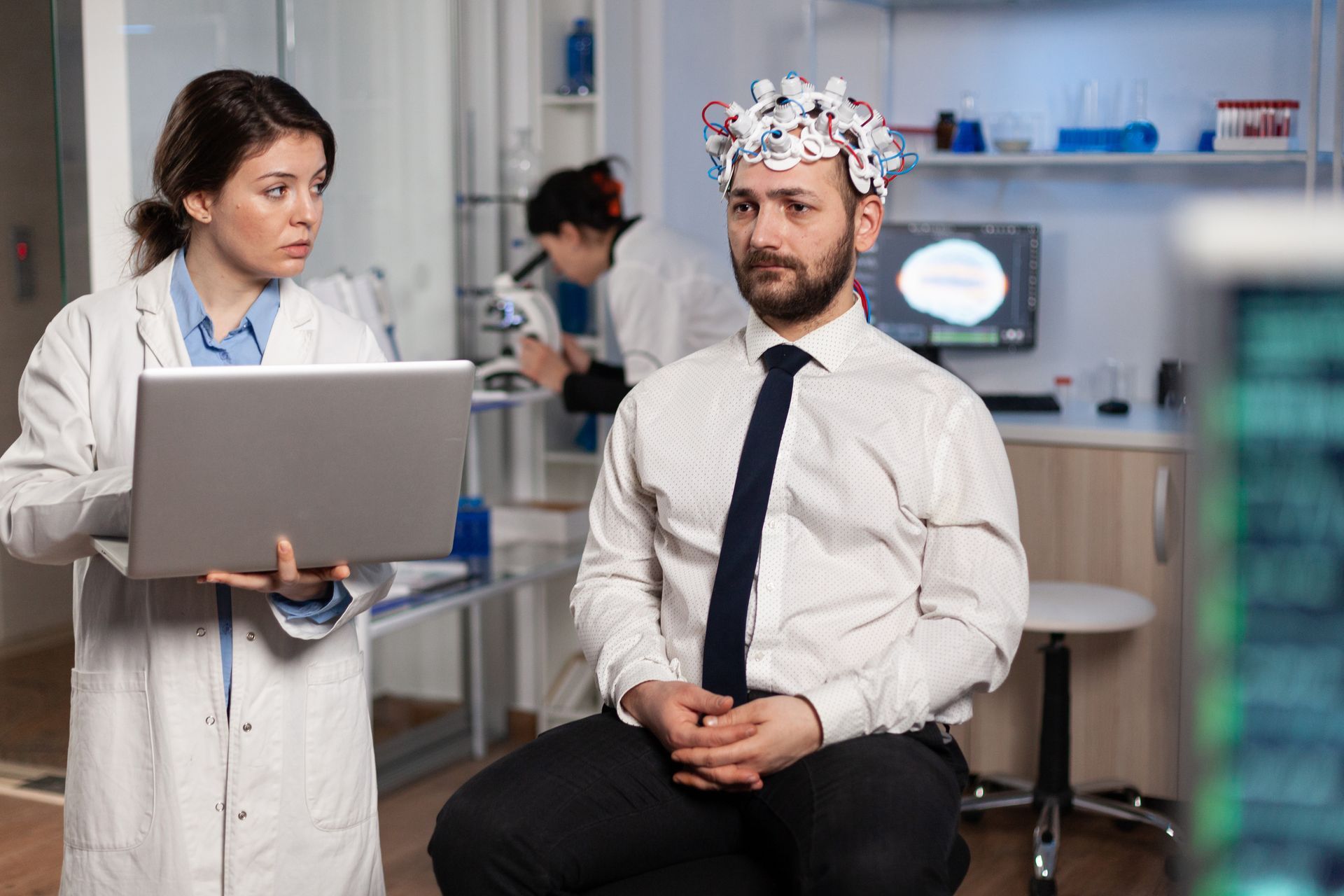
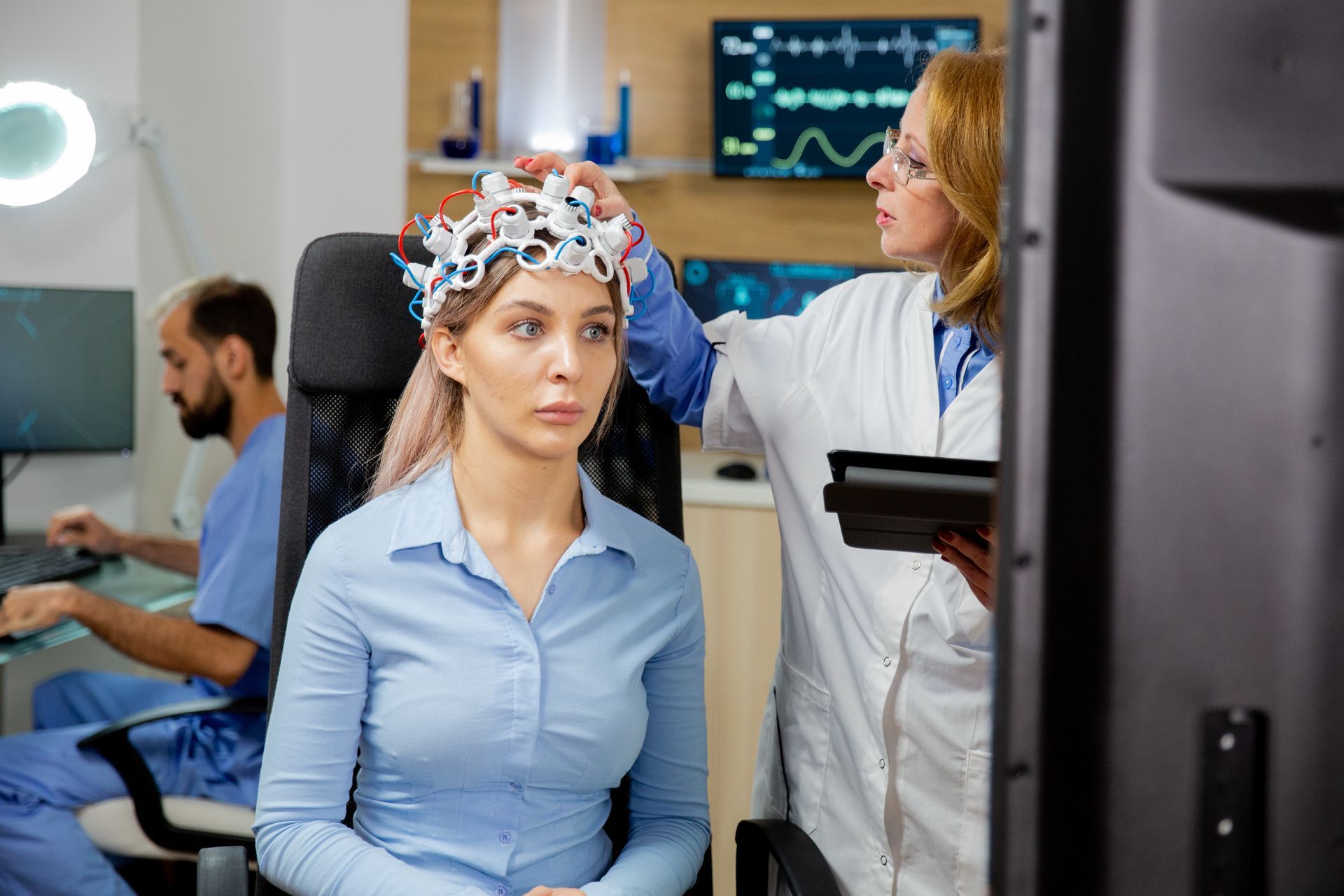
Their daily responsibilities may include setting up EEG equipment, transporting testing supplies, positioning patients, attaching electrodes, monitoring diagnostic procedures, and maintaining accurate testing documentation.
These activities can expose technicians to physical injuries and workplace-related health risks.
One common concern is musculoskeletal injury. EEG technicians may need to bend, stretch, kneel, or remain in uncomfortable positions while attaching electrodes and preparing patients for neurological testing. Repeated movements and improper lifting techniques can contribute to back, shoulder, and neck injuries.
Another concern is transportation-related accidents. Mobile technicians often drive between hospitals, nursing homes, rehabilitation facilities, and private residences. Depending on the circumstances and applicable workers' compensation rules, injuries sustained during employment-related travel may qualify for benefits.
Exposure to infectious diseases is another potential workplace hazard. Technicians may work with patients who have different medical conditions, requiring appropriate infection-control procedures, personal protective equipment, and safe handling practices.
Equipment-related injuries are also possible. Carrying EEG machines, cables, accessories, and other diagnostic supplies can create lifting hazards, while poorly maintained electrical equipment may introduce additional workplace safety concerns.
Because these risks are associated with the nature of mobile diagnostic work, employers should evaluate their workers’ compensation coverage carefully rather than assuming that a standard office-based insurance arrangement addresses every exposure.
Does Workers’ Compensation Cover Injuries While Traveling Between Patient Locations?
Travel is one of the most important considerations when determining workers’ compensation coverage for mobile EEG technicians.
In California, employees generally are not covered for every injury that occurs during an ordinary commute between home and their regular workplace. However, different rules may apply when traveling is an essential part of the employee's job.
For example, a mobile EEG technician who travels directly from one assigned patient location to another during scheduled working hours may have a stronger basis for workers’ compensation coverage if an accident occurs during that employment-related trip.
Similarly, a technician who is required to travel to different healthcare facilities to complete diagnostic appointments may be considered to be performing work-related duties while traveling.
California recognizes circumstances in which employees whose work requires travel can remain within the course of employment during a business trip. Nevertheless, coverage depends on the specific facts, including the purpose of the trip, employer requirements, work assignments, and whether the employee was engaged in a personal activity unrelated to work.
Employers should clearly document travel expectations, assigned appointments, mileage arrangements, and job responsibilities. These records can help clarify whether an accident occurred during employment-related activities.
It is also important to understand that workers’ compensation and commercial auto insurance serve different purposes. Workers’ compensation may address eligible employee injuries, while commercial auto insurance addresses certain vehicle-related liabilities and physical damage. Businesses should evaluate both policies when employees regularly travel for diagnostic services.
Are Independent Contractor EEG Technicians Covered?
Not every mobile EEG technician automatically receives workers’ compensation coverage through the company that hires them. Employment classification plays an important role in determining insurance responsibilities.
Some diagnostic companies hire technicians as independent contractors, while others employ them directly as full-time, part-time, or temporary workers.
California has strict worker-classification requirements. Under the ABC test, a worker is generally presumed to be an employee unless the hiring business can establish all three required conditions for independent contractor status, subject to applicable statutory exceptions and alternative classification tests.
This means that simply signing an independent contractor agreement does not automatically establish that an EEG technician is legally self-employed.
For example, a diagnostic company may assign technicians to specific patient appointments, determine their schedules, provide testing equipment, establish work procedures, and require them to follow company policies.
These circumstances may raise questions about whether the technicians are genuinely independent contractors or employees under California law.
The classification analysis is particularly important when EEG testing is a central service offered by the hiring company. Businesses should not assume that paying technicians through Form 1099 automatically removes their workers’ compensation obligations.
Misclassification can expose employers to legal disputes, unpaid insurance obligations, penalties, and unexpected financial liabilities. Healthcare businesses should review their actual working arrangements and obtain appropriate professional guidance before classifying mobile technicians as independent contractors.
What Workers’ Compensation Benefits Can Mobile EEG Technicians Receive?
When a mobile EEG technician experiences an eligible work-related injury or illness, California workers’ compensation may provide several types of benefits.
Medical treatment is one of the primary benefits. It can cover reasonable and necessary medical care related to the accepted workplace injury, subject to applicable workers’ compensation rules.
Temporary disability benefits may help replace a portion of lost wages when an employee cannot work while recovering from an occupational injury.
If an employee experiences a permanent impairment that affects their ability to perform regular job duties, permanent disability benefits may also be available.
Some injured employees may qualify for supplemental job displacement benefits when they cannot return to their usual employment and meet the applicable eligibility requirements.
In the unfortunate event of a fatal workplace injury or illness, qualifying dependents may receive death benefits.
These benefits are designed to help injured employees access medical care and financial support while protecting employers through California's workers’ compensation system. The specific benefits available depend on the injury, medical findings, eligibility requirements, and applicable state regulations.

Recent News