How to Choose the Best Workers Comp Insurance in California for Equipment Dealerships
See How We're Different
or call us: 866-226-4436
How to Choose the Best Workers Comp Insurance in California for Equipment Dealerships

Running an equipment dealership in California comes with unique responsibilities, from managing heavy machinery and maintaining service departments to coordinating equipment deliveries and assisting customers. Whether your business sells agricultural equipment, construction machinery, forklifts, industrial tools, or other specialized equipment, protecting your employees is essential. One workplace accident can lead to medical expenses, lost work time, operational disruptions, and significant financial pressure.
Choosing the right workers' compensation insurance is therefore more than a legal requirement. It is an important part of managing business risks, supporting employees, and maintaining long-term financial stability. Understanding your dealership's operations, comparing insurance providers, and evaluating coverage options can help you select a policy that meets your needs without paying for unnecessary expenses.
Understand California's Workers' Compensation Requirements
Before comparing insurance policies, equipment dealership owners should understand their legal obligations. California generally requires employers with one or more employees to maintain workers' compensation coverage, subject to applicable legal rules and exceptions. Employers must provide benefits for qualifying work-related injuries and illnesses, regardless of who was at fault.
These benefits can include medical treatment, temporary disability payments, permanent disability benefits, supplemental job displacement benefits when applicable, and death benefits for eligible dependents.
For equipment dealerships, maintaining appropriate coverage is particularly important because employees may work in environments involving heavy machinery, moving vehicles, mechanical components, and loading equipment. A dealership without the required coverage can face serious legal and financial consequences.
California employers can generally obtain coverage through a licensed insurance company or the State Compensation Insurance Fund. Qualifying businesses may also explore self-insurance, although this option involves financial and regulatory requirements. Understanding these alternatives provides a useful starting point when evaluating your insurance needs.
Evaluate the Specific Risks of Your Equipment Dealership
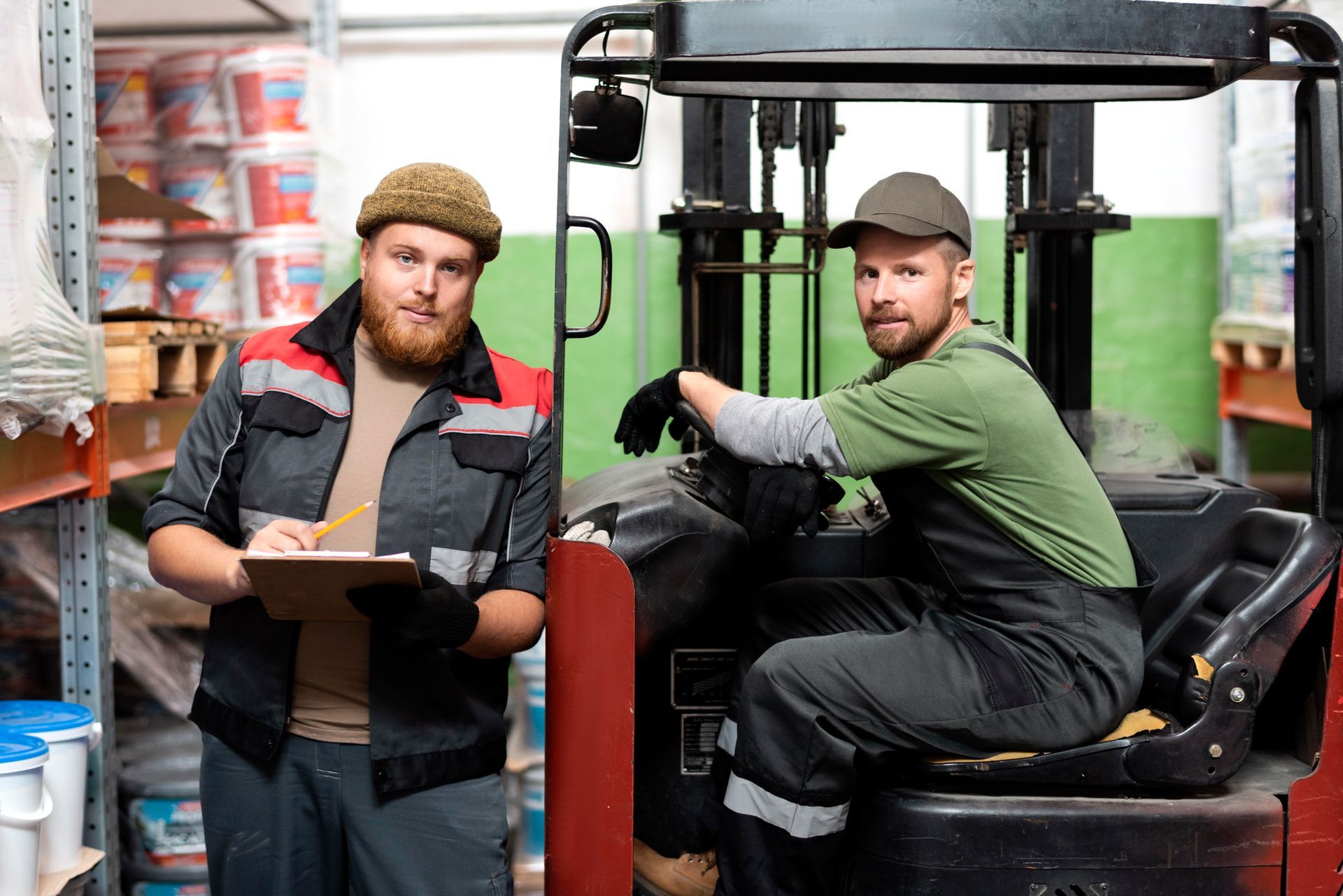
Not every equipment dealership has the same workplace risks. A business that primarily sells small tools may have different insurance requirements from a dealership that sells tractors, excavators, forklifts, or other heavy machinery.
For example, sales representatives may spend much of their time in offices or showrooms, while warehouse employees regularly move inventory and handle deliveries. Service technicians may work with hydraulic systems, electrical components, lifting equipment, and heavy mechanical parts. Delivery personnel may also face risks associated with loading, unloading, and transporting machinery.
Before requesting insurance quotes, review the duties performed by each employee and identify the hazards associated with those activities. Consider whether your dealership operates a repair shop, maintains an outdoor equipment yard, stores heavy inventory, or provides on-site customer services.
A clear understanding of these activities helps your insurance broker determine the appropriate employee classifications and identify potential coverage concerns. It also makes it easier to explain your business accurately to insurers and obtain more reliable quotes.
Compare Insurance Providers and Coverage Options
Price is an important consideration, but the cheapest policy is not necessarily the best choice for your dealership. Insurance providers can differ in their underwriting requirements, claims management services, industry experience, and responsiveness when an employee gets injured.
Start by obtaining quotes from several insurers or working with a licensed commercial insurance broker who understands equipment dealerships. Compare the proposed premiums, policy conditions, payment options, and services available throughout the policy period.
Ask how workplace injury claims are handled, how quickly claims representatives respond, and what resources are available to help injured employees receive appropriate medical care. Efficient claims management can make a meaningful difference when an employee cannot return to work immediately.
You should also review the employers' liability section of the policy, which provides protection for certain employer liabilities arising from employee injuries or illnesses that fall outside the benefits covered by workers' compensation law.
California's workers' compensation market uses an open-rating system, meaning insurers can establish their own filed rates within the state's regulatory framework. As a result, premiums may differ between providers even when the businesses being insured have similar operations.
Pay Close Attention to Employee Classifications
Employee classification is one of the most important factors when selecting workers' compensation insurance. Insurers use classification codes and corresponding rates to calculate premiums based on the type of work performed and its associated risks.
An equipment dealership may employ sales staff, administrative personnel, warehouse workers, delivery drivers, and mechanical technicians. These employees do not necessarily perform the same duties or present the same level of occupational risk.
Providing an accurate description of each position helps reduce the possibility of classification errors that could aff
ect your premium or lead to complications during a policy audit.
Do not assume that every employee can automatically be placed under a single classification simply because they work for the same dealership. Discuss your staffing structure with your broker and ask how employees who perform multiple duties should be reported under the applicable classification rules.
You should also review your payroll estimates carefully. Since payroll is a major component of premium calculations, inaccurate projections can result in unexpected adjustments when the insurer audits your records.
Consider the Importance of Workplace Safety
A strong workplace safety program can help reduce injuries, support employees, and improve your dealership's overall risk profile. Although safety measures do not guarantee lower insurance premiums, insurers may consider loss history and risk-management practices when evaluating an account.
Equipment dealerships should establish clear procedures for operating machinery, lifting heavy components, handling inventory, and maintaining service areas. Employees should receive appropriate training before using forklifts, hoists, vehicle lifts, and other specialized equipment.
Regular inspections can help identify hazards such as damaged tools, slippery floors, inadequate lighting, and improperly stored machinery. Providing suitable personal protective equipment and maintaining clear walkways can also reduce avoidable incidents.
Keep written records of safety training, inspections, and corrective actions. These records can demonstrate that your dealership takes employee protection seriously and may help when discussing risk-management opportunities with your insurance provider.
Understand Your Premium and Look for Ways to Save
The cost of workers' compensation insurance depends on several factors, including employee classifications, estimated payroll, claims history, and the applicable experience modification. Insurers may also consider underwriting factors and available programs when determining the final premium.
To manage expenses, review your payroll estimates before renewing the policy and notify your broker when staffing levels or business operations change. Accurate information can help prevent unnecessary premium adjustments.
Review your claims history and investigate recurring workplace incidents. If several employees experience similar injuries, improving the relevant work procedures may help prevent future claims.
You should also ask your insurer or broker whether payment plans, loss-control services, or other eligible programs are available. Compare the overall value of these options rather than selecting a provider solely because it offers the lowest initial quote.
Review Claims Support and Policy Administration
Insurance protection is most valuable when your dealership can access support quickly after an incident. Before purchasing a policy, ask how to report injuries, who will manage claims, and what documentation your business must maintain.
California employers have specific responsibilities when workplace injuries occur. For example, employers generally must provide the required workers' compensation claim form within one working day after learning of a work-related injury or illness. Reporting and documentation requirements should be incorporated into your internal procedures.
A reliable insurer should explain its claims process clearly and provide accessible assistance when questions arise. Your dealership should also maintain accurate payroll records, employee information, and workplace incident reports to support policy administration and claims handling.
Selecting the best workers' compensation insurance in California requires a careful assessment of your operations, employee classifications, safety practices, budget, and claims support needs.
By comparing multiple insurers, verifying policy details, maintaining accurate payroll records, and investing in workplace safety, equipment dealership owners can make more informed insurance decisions. The goal is not simply to find the lowest premium but to secure dependable protection that meets legal obligations and supports employees when workplace injuries occur.
Ultimately, the right workers' compensation policy should fit the way your dealership operates today while accommodating future changes in staffing, inventory, and services. Working with a knowledgeable insurance professional can help you evaluate your options, understand your responsibilities, and build a more resilient business for the years ahead.

Recent News