California Workers’ Compensation Requirements for Equipment Dealership Owners
See How We're Different
or call us: 866-226-4436
California Workers’ Compensation Requirements for Equipment Dealership Owners

Another important consideration is determining which workers must be covered. Equipment dealerships may employ permanent staff, temporary workers, delivery personnel, mechanics, and individuals described as independent contractors. However, the label used in a contract does not automatically determine whether a worker qualifies as an employee under California law.
Business owners should carefully evaluate each working relationship and seek professional guidance when classification is uncertain. Incorrectly treating an employee as an independent contractor can create insurance, payroll, and legal problems.
Dealership owners should also review the rules applicable to corporate officers, directors, partners, and limited liability company members. Certain individuals may qualify for exclusions if specific statutory requirements are met, but exclusions should never be assumed. The appropriate treatment depends on the business structure, ownership, and applicable legal provisions.
What to Do When an Employee Is Injured
When a workplace injury occurs, dealership owners should respond promptly and follow the required claims procedures. Employees should receive appropriate medical attention, and supervisors should document the circumstances of the incident, including the equipment involved, the employee’s duties, and any relevant safety concerns.
California employers generally must provide the required workers’ compensation claim form within one working day after learning of a work-related injury or illness. Employers must also complete their portion of the form and forward it to the claims administrator within the applicable deadline. For a reported claim, the employer generally must authorize up to $10,000 in appropriate medical treatment while the claim is being investigated, subject to the applicable rules.
Prompt reporting can help prevent administrative delays and ensure that injured employees understand their rights. Owners should train supervisors to recognize potential workplace injuries, maintain accurate incident records, and communicate with their insurance carrier throughout the claims process.
Workplace Safety and Injury Prevention
Maintaining workers’ compensation insurance is only one part of an effective risk management strategy. Equipment dealerships should also establish practical safety procedures that reduce the likelihood of accidents.
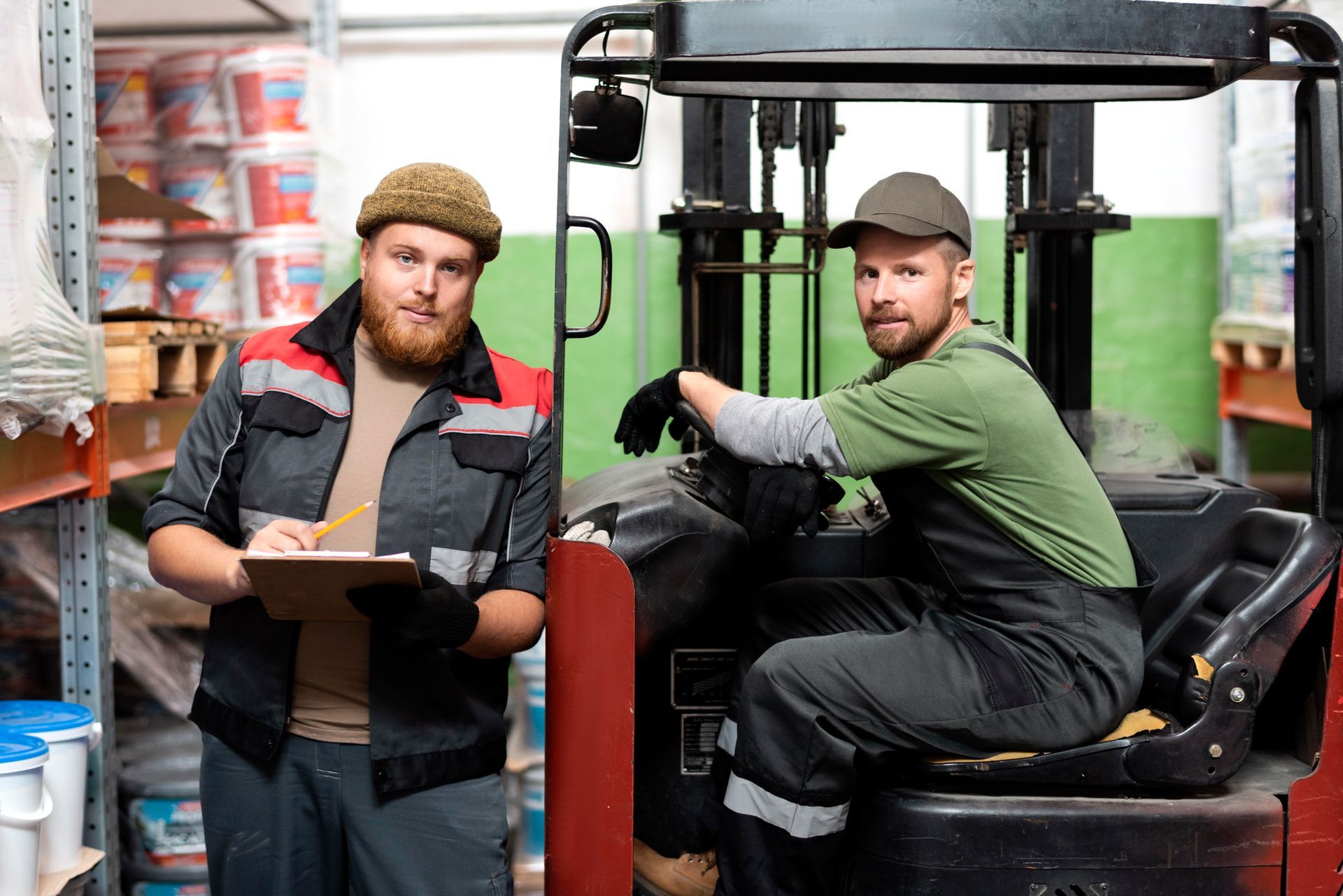
Employees who operate forklifts, handle heavy machinery, or perform mechanical repairs should receive appropriate training for their assigned duties. Regular inspections of lifting equipment, clear pedestrian walkways, proper storage of heavy components, and appropriate protective equipment can help reduce workplace hazards.
Dealership owners should also establish procedures for handling hydraulic fluids, fuels, batteries, and other potentially hazardous materials. Repair areas should be maintained properly, and employees should understand how to report unsafe equipment or working conditions.
A consistent safety program can protect employees while helping a dealership avoid operational disruptions associated with workplace injuries. It may also support discussions with insurance providers about the dealership’s risk management practices, although premium reductions are not guaranteed.
Penalties for Operating Without Required Coverage
Failing to maintain legally required workers’ compensation coverage can have serious consequences in California. Authorities may issue a stop order prohibiting an employer from using employee labor until appropriate coverage is obtained. Employers may also face substantial penalties, criminal consequences, and liability for benefits arising from workplace injuries.
For an equipment dealership, these consequences can disrupt sales, repairs, deliveries, and customer service. An uninsured business may also face significant financial exposure if an employee suffers a serious injury.
Owners should therefore verify that their policy is active, premiums are handled according to the agreed terms, and coverage reflects the dealership’s current workforce and operations. Proof of coverage should be maintained with other essential business records.

Recent News